
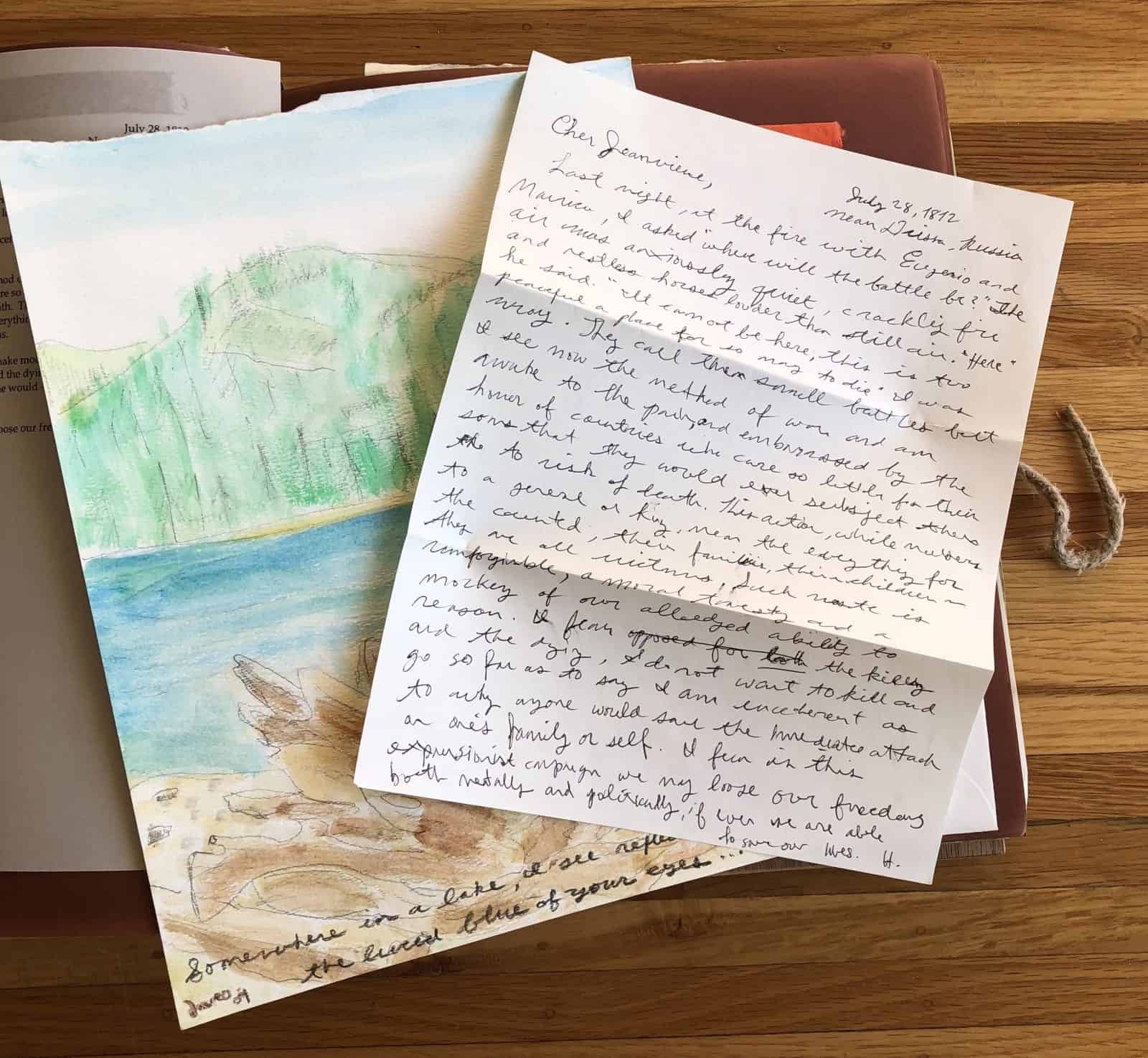
In 2004, I created a mixed-media creative writing project called “Letters from Russia” which was meant to be a series of well,… *obviously* letters written from Russia from the point of view of a cobbler in Napoleon’s army to his lover in France. All in all an unlikely and complicated conceit conceived as was a way to discuss various topics around love and war.
Appropriately, was written/crafted as part of a program at Evergreen State College called “Poets and Philosophers Discuss Love and War” which was my final “seminar” (at Evergreen, you don’t take courses and classes, rather programs and seminars and independent contracts and other non-traditional interdisciplinary learning contexts). This program involved going to Lake Crescent on Olympic Peninsula with three faculty members with different specialties – philosophy, history and poetry/creative writing – staying in cabins, doing the Evergreen-ubiquitous group projects and assignments of various kinds but also working on an individual big project amidst mediation.
Unsurprisingly, I was keen to do something “big” to finish off my hard won Bachelor of Arts degree which spanned 17 years and four or five colleges/universities depending on how you count them. A “capstone” of a sort. {digression: previously thought a Master of Fine Arts in creative writing was my path and with that would come a big project/thesis or whatever, since that wasn’t going to happen, wanted to do something that felt like similar for personal satisfaction}
So, at the idyllic lakefront surrounding, i diligently worked along on this complicated house of cards – in between long stretches of partying, drinking racks of beer, usual herbs, one guy brought a motorboat and a gun – I mean none of it made sense.
I did a few of the assigned assignments (writing something about explaining peace to a banana slug or other contrived drudgery) while putting this project together in my head. I could imagine the finished product: wanted an “artifact” with tactility and vague sense of authenticity despite it being completely fictional.
The finished result was series of letters written on different pieces of paper stock from my suitcase stationery stash, compiled to create the feeling that the protagonist “Henri” (all the characters were named after French Canadian hockey players) was with the army, scavenging any kind of paper he could find, and using different sorts of writing materials. Then I added a series of illustrations, paintings, other visual expressions in various medium and styles (and worked in the character of an Italian conscript with his unit who is a painter as an excuse to include these paintings).

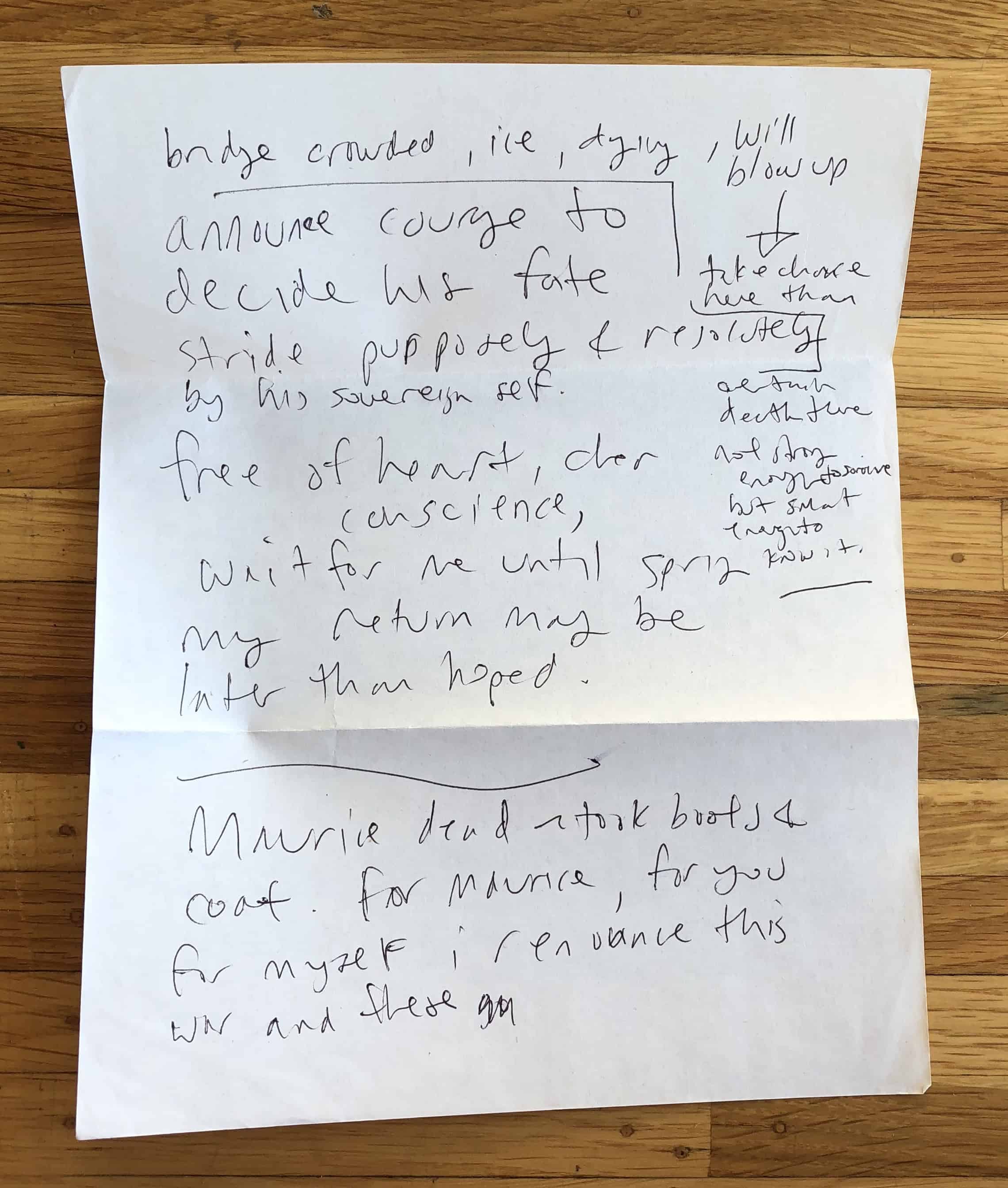
I wrote some test letters (readers may notice original drafts used a different name for the recipient of the letters) to try out some different papers, handwriting styles, pens and to find my rhythm. Once I found my rhythm it all came together very quickly but finding that vibe and materials and to start was a real challenge.
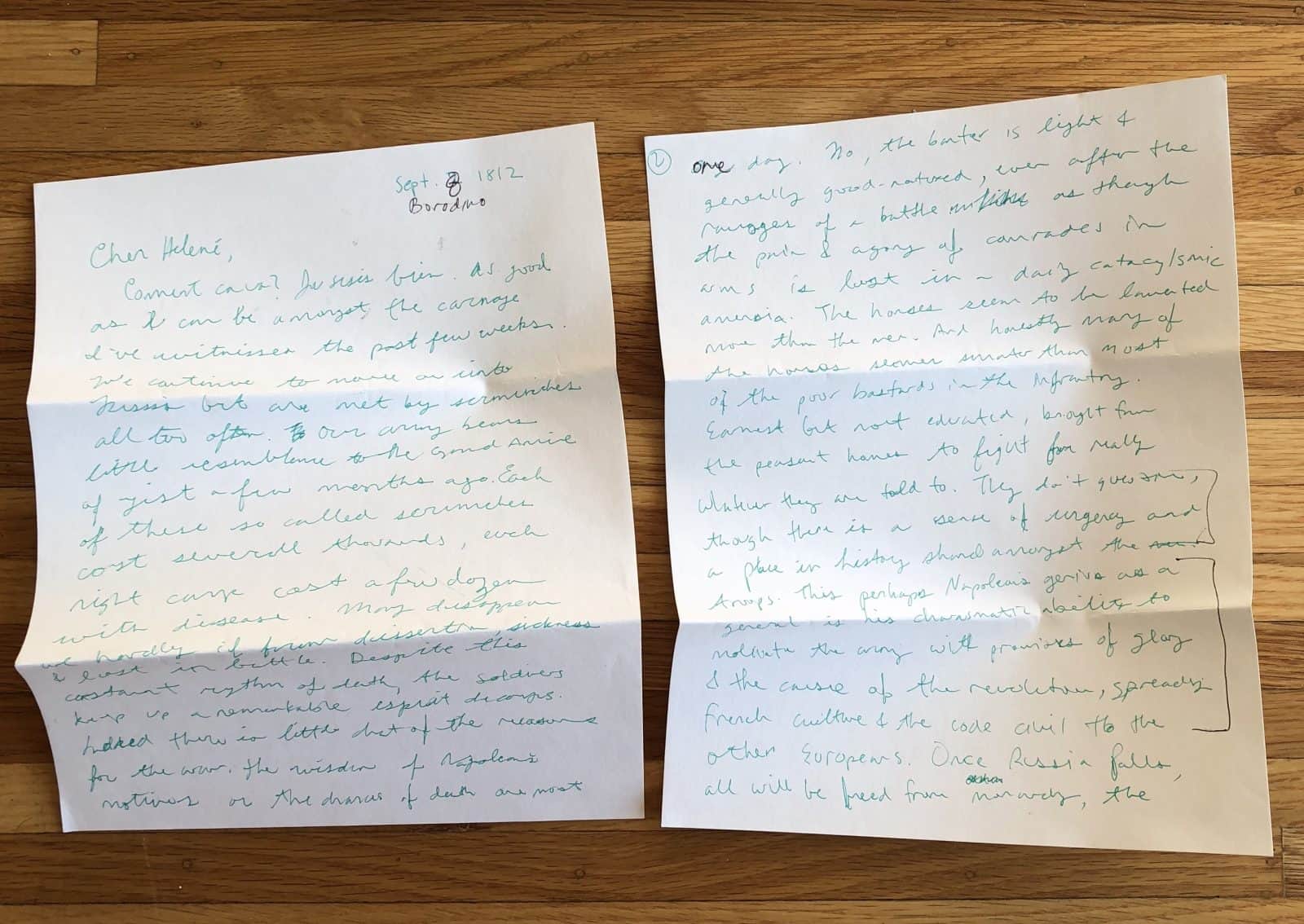
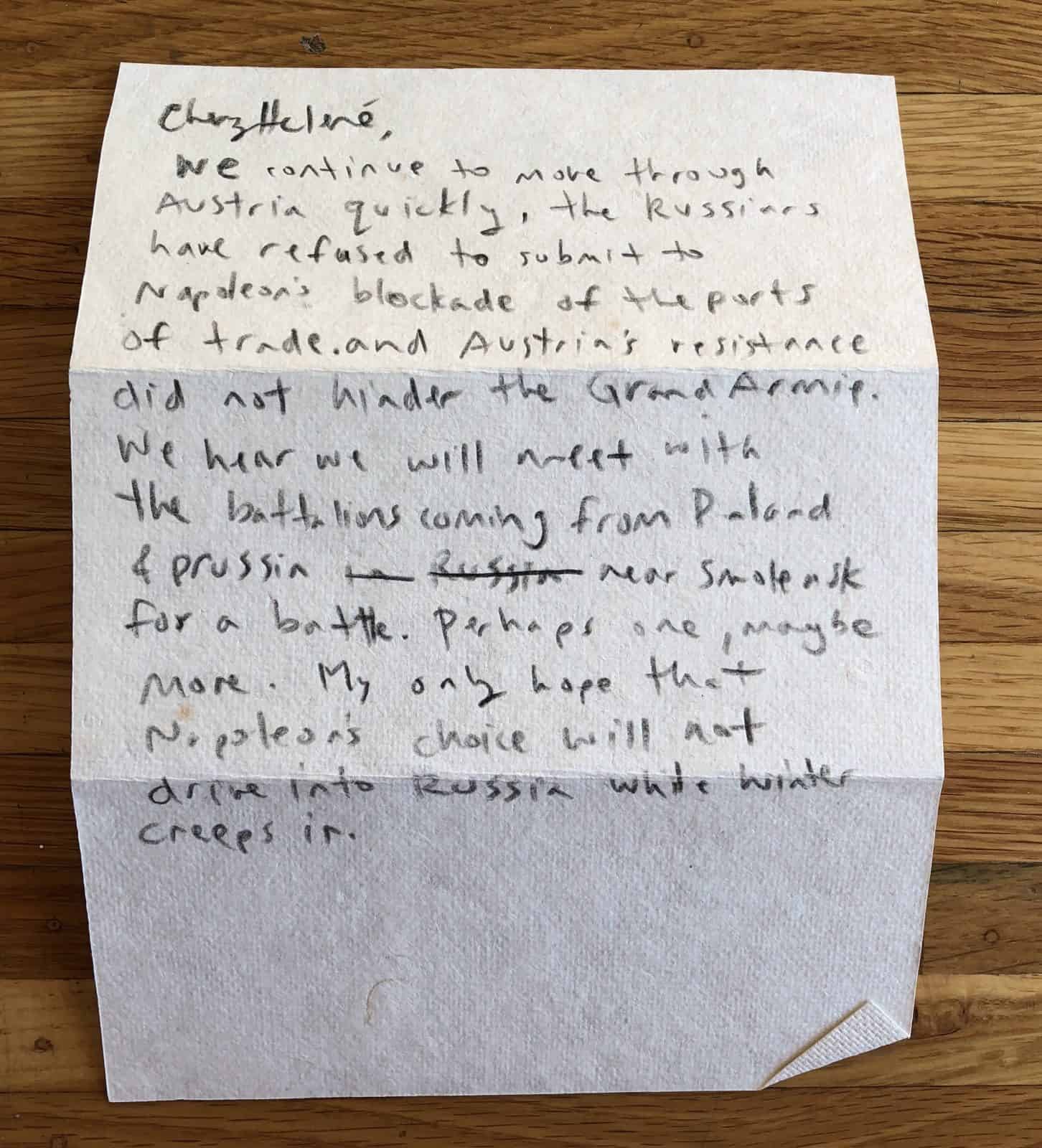
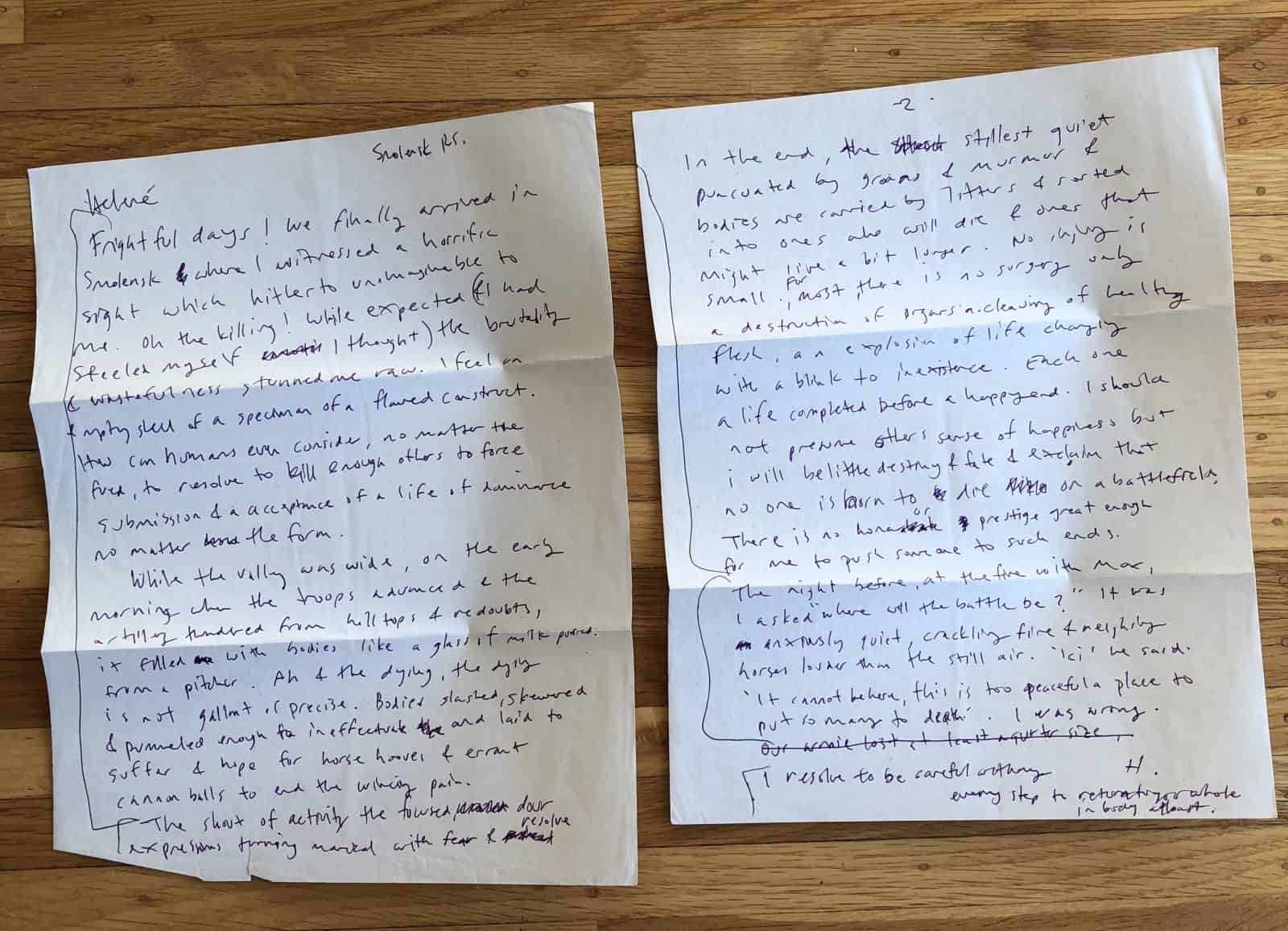

After the Lake Crescent camp-out, i completed the project in the Oregon village of Manzanita going out into the sand dunes or the forest “in character” very method after all, finally climbing the local mountain with just a stub of a pencil and grey sheet of paper to do the final “declaration” and painting from the summit of the mountain, all meant to be his last message that some how made it to his gasping and fainting fiancé.

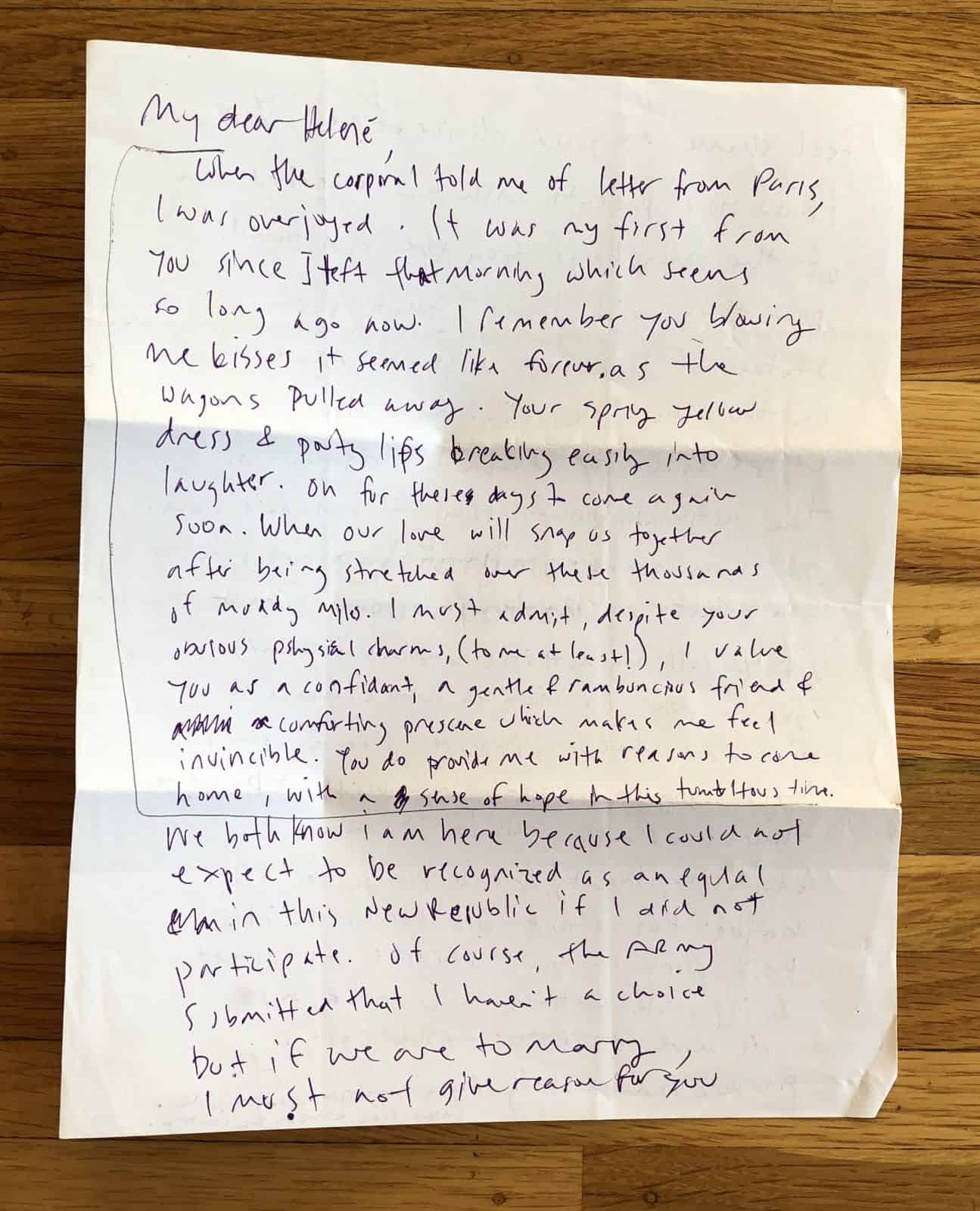
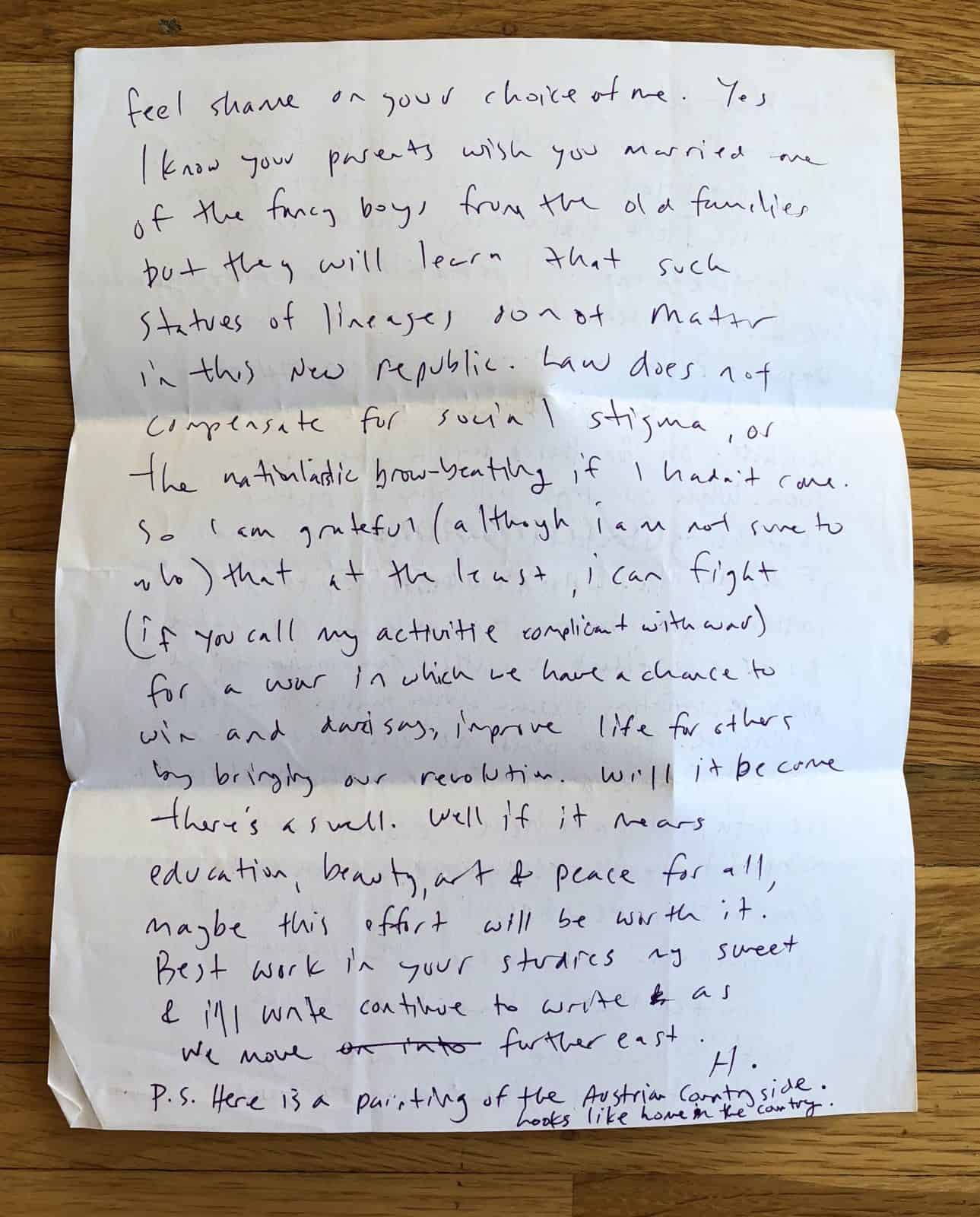

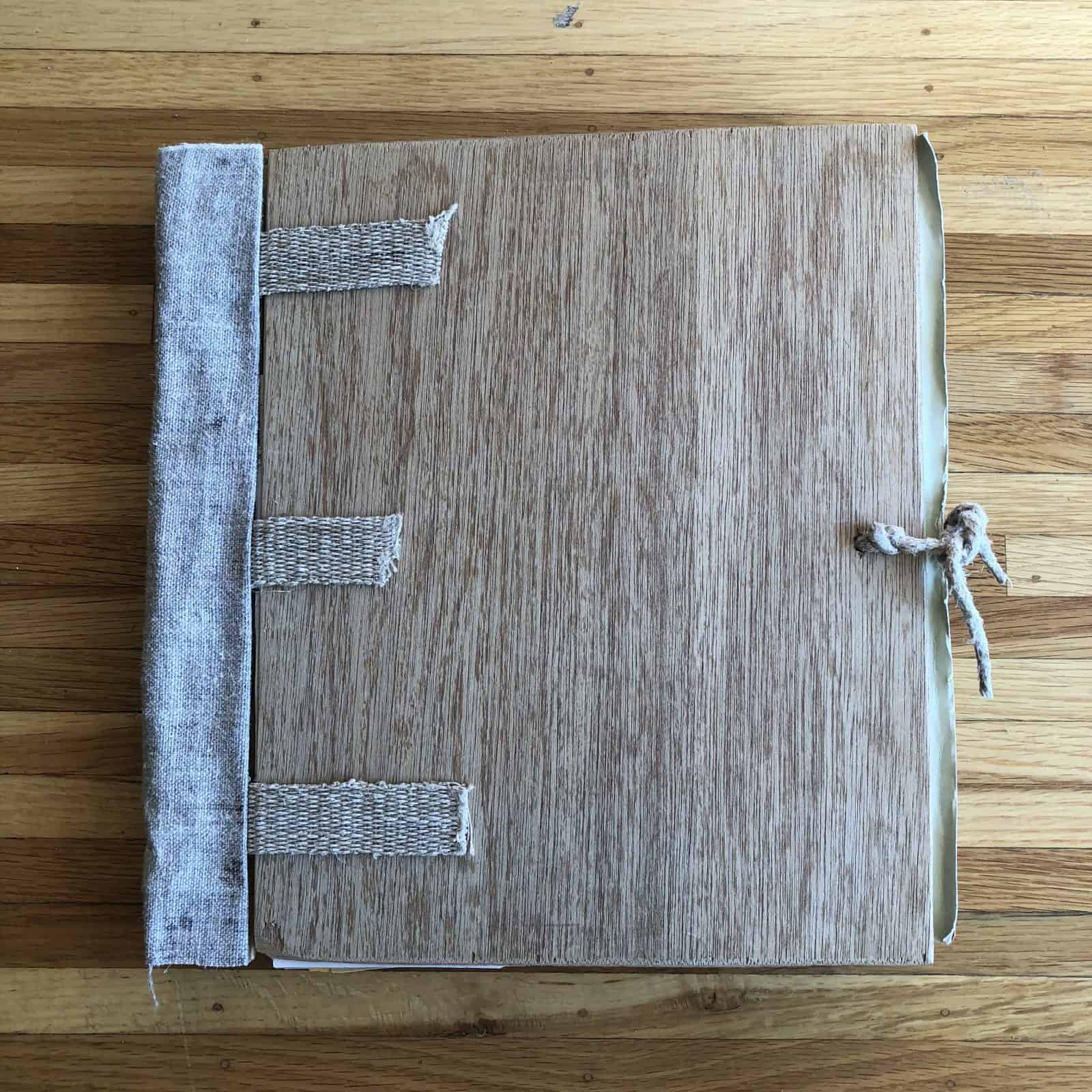
Then came “transcripts” of all the letters on vellum paper which were mounted on heavyweight large-sized paper and bound the whole thing into a ridiculously huge book with wooden covers, bound with hemp twine and hemp canvas, and bundled it all up as though it had been in someone’s attic. Glorious! Oh then wrote a “note to reader” to build on the conceit this was found in someone’s attic and shared it out into the world.

{Oddly enough, despite the fact that a cobbler in the muddy and bloody trenches of Napoleon’s ill-conceive march into Russia would be unlikely to be offering discourse on the political nuances of negotiations between monarchies and unpacking strategic decisions, and the fact that it was all written in a sort of quasi-haughty English rather than French, “several people” out in the wild really thought it was authentic somehow and let their rancour be known when realizing they’d been duped (these comments exist somewhere in this archive if curious).
I turned in the project to great reaction from my program faculty sponsor who encouraged me to become a history professor/I don’t know… He was very kind but I didn’t know what to do with the finished product besides sort of “float it out there” and see what happens. #NotMuchOfaStrategy
As it goes, did a great community radio program with some ladies at UC Santa Cruz or Santa Barbara (audio) or somewhere (transcription) – i recall sitting at my then-home in North Vancouver, drinking red wine as they extolled the virtues of my epistolary literature and took turns reading the letters, sigh.

I also used it as an example about how to explore one’s own creative process at a presentation at Northern Voice conference in Vancouver – I was cut short for time and sort of rushed through it all and wish I would’ve had another opportunity to talk about “all of this” – at the time I thought I would have many opportunities but life changes.

Also was serialized a short-running web literary magazine called Exode and an interview about it with excepts in Rain Zine.
Finally, sent the transcript to Chronicle Books for submission for publication. They sent a very nice letter back saying they enjoyed the letters and “felt them to be important” but thought that the work would be better off as a novel with the letters as part of the novel. Sure it’s a great idea but by then life had taken some other turns and I’m not really a “marathoner” as far as sitting down and banging out Tolstoy length tales. [note to self: include the letter here when you come across it]
Of course Leo Tolstoy’s “War and Peace” and his “Physiology of War” (for logistics) were huge inspiration and source material for this, and a few other books which I have listed somewhere in this archive. After all, i wanted all the dates, locations and battles etc to be exactly accurate as well as details of machinations of workings of the army.
Afterwards, folks told me how this letter writing form reminded them of “Griffin and Sabine” series by Nick Bantock. Turns out Nick Bantock lived in Victoria (where I lived at the time except I didn’t really live anywhere but that’s another story) so i dropped off a copy of my work in a mysterious envelope at a bookshop reading (wasn’t able to attend myself due to the *illness*. Allegedly introduced, later when I was in India, I contacted him and invited myself over to his studio, mailed him some packets with this project and peaked his interest with stashes of exotic ephemera and started a conversation and correspondence with him to (i assume) our mutual amusement.
So, this is all a long way to say that:
1) the original wood, hemp, vellum and paper book is missing. Like I really don’t know where it is. I know when I was really lost in the fog I gave a lot of stuff away, but this must be somewhere.
2) and somewhere along the way, o took photos of the notes made to construct the story. Because i had very specific topics to address, and wanted to limit myself to letter-sized amounts of paper (rather than my usual endless fever pitch soliloquies), i made notes cards, yup:


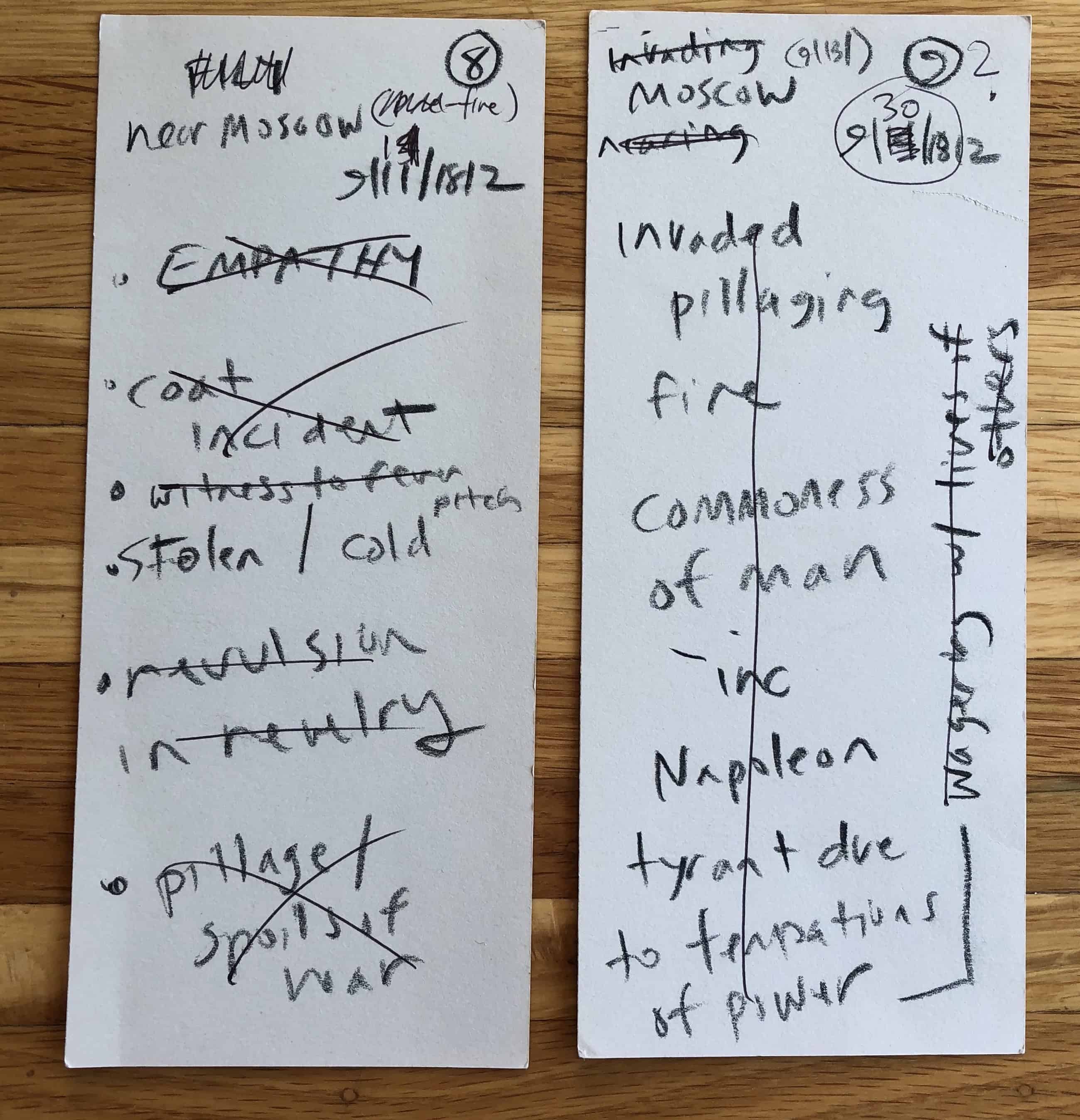
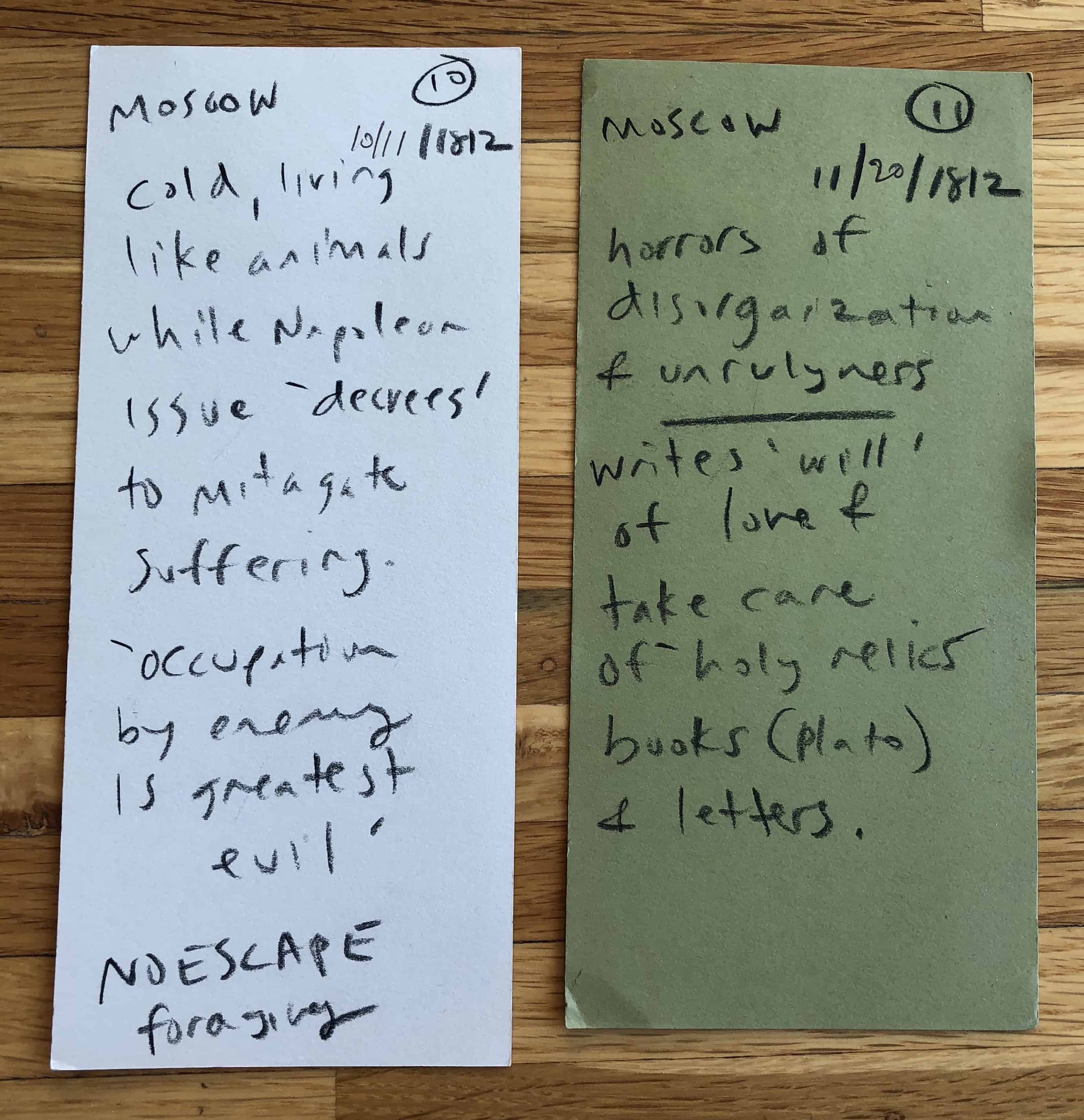
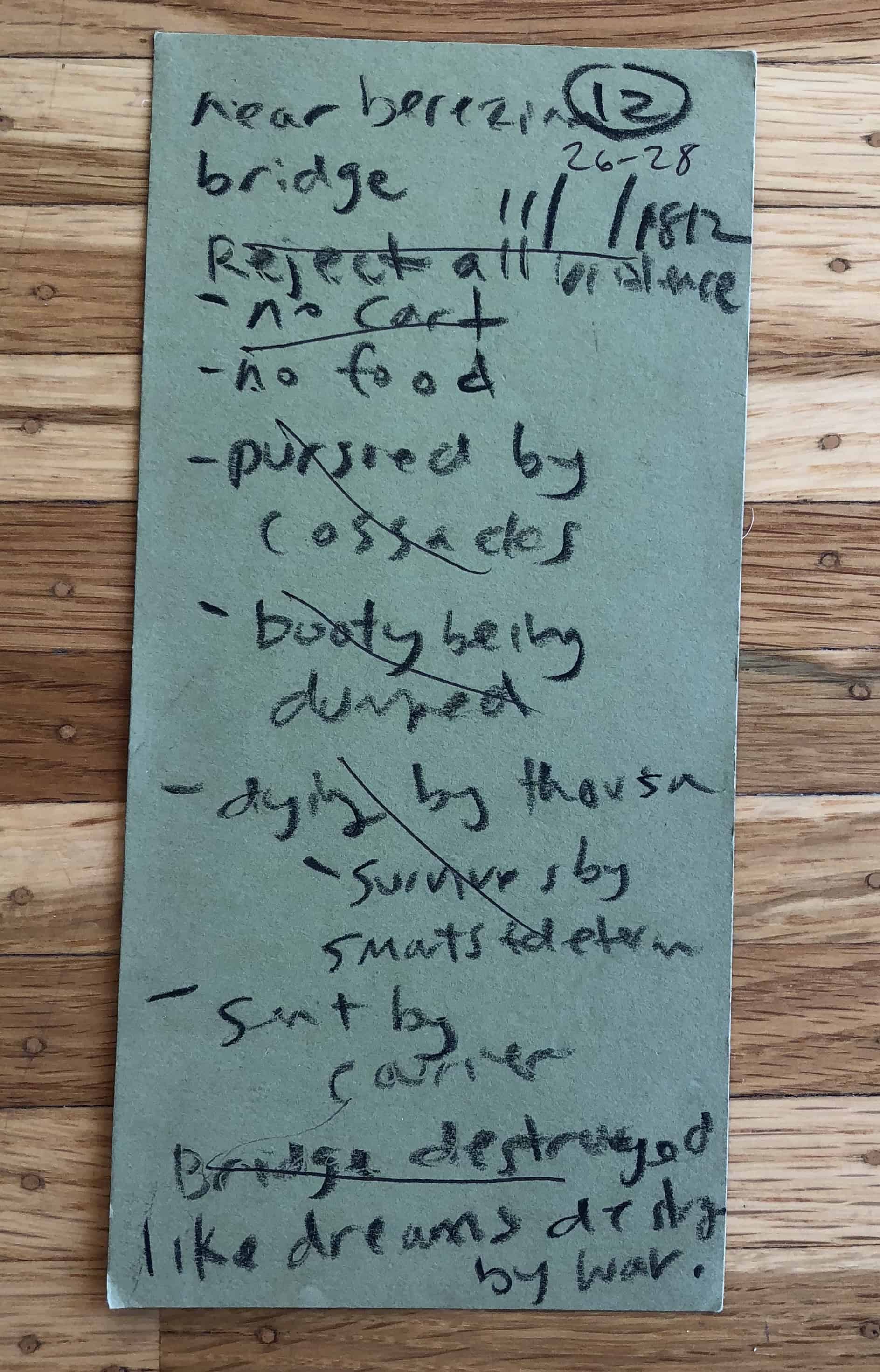
Anyhow, for the archives and possible a shred of inspiration for others, here are all the notes, framework, doodles, draft maps, trial letters, “themes and reasons” for Letters from Russia.

Aside: Last night I was reading “draft number four” by the great nonfiction writer John McPhee and he talks a lot about his process of notecards spread over standard size plywood on sawhorses in his studio and once he has his notecards in place and in order, he doesn’t really change much. He just takes that “section” of notecards and writes about it, puts it back in the envelope and at the end he puts all the sections together and that’s the book. Realized I had accidentally sort of done the same thing whereas I am more a “flashes of inspiration gathered from long walks or long baths” kind of writer.

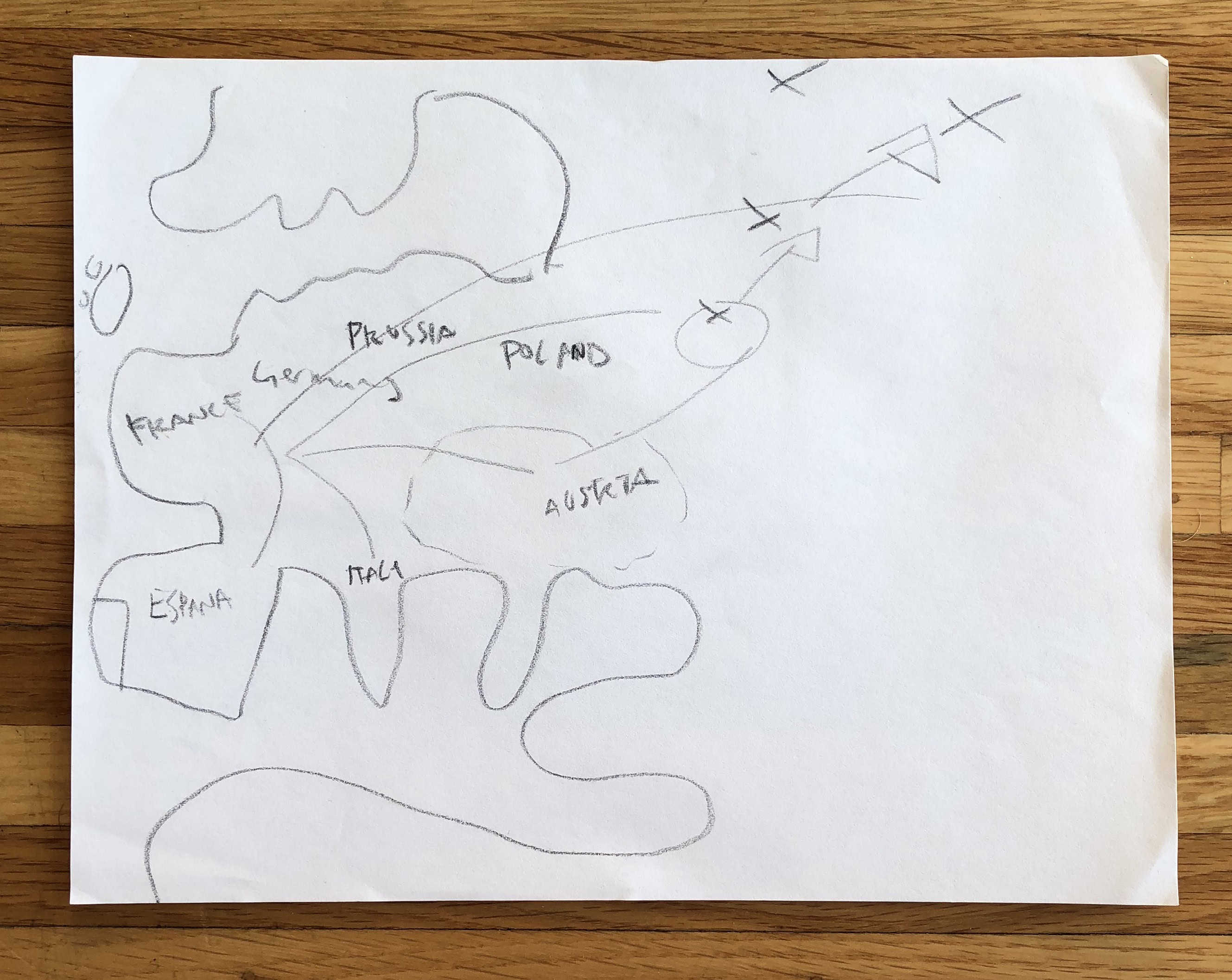
Of course you can find all the Letters from Russia – both transcripts, the original letters and photos of the finished product as well as the aforementioned interviews – within this archive
&/or for your downloading enjoyment
fully illustrated PDF of “Letters from Russia”

